
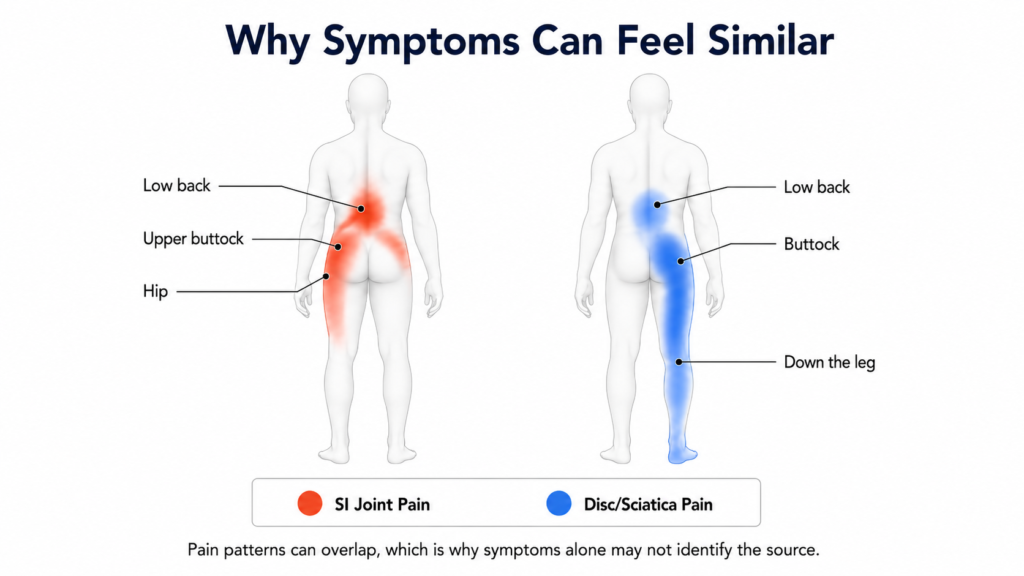
SI joint pain and a herniated disc can feel surprisingly similar. Both may cause lower-back pain, pain into the buttock or leg, and discomfort that changes with movement or sitting. But they are not the same condition, and the clues that separate them can matter when deciding what type of care may help.
In this guide, we’ll explain the common differences between SI joint pain and a herniated disc, how their symptoms can overlap, and when it makes sense to have persistent lower-back or leg pain properly evaluated.
SI Joint Pain vs. Herniated Disc: What’s the Difference?
SI joint pain comes from irritation or dysfunction of the sacroiliac joint, where the pelvis connects to the lower spine. A herniated disc involves one of the spinal discs, which can bulge or rupture and sometimes irritate nearby nerves.
Because both conditions can cause lower-back pain and pain that spreads into the buttock or leg, they are often confused. The pattern of symptoms, however, can offer useful clues about which area may be involved.
SI Joint Pain vs. Herniated Disc: Symptom Comparison
| Symtom | SI Joint Pain | Herniated Disc |
|---|---|---|
| Typical pain location | Lower back, buttock, or near the back of the pelvis, often on one side | Lower back with possible pain into the buttock, leg, or foot |
| Leg pain | Can occur, but is often less nerve-like | More common when a nerve root is irritated |
| Numbness or tingling | Less typical | More common if a nerve is compressed |
| Pain with sitting | May worsen with prolonged sitting or certain positions | Sitting may increase pressure on the disc and worsen symptoms |
| Pain with coughing or sneezing | Less characteristic | Can sometimes worsen disc-related nerve pain |
| Pain below the knee | Less common | More common when nerve irritation is involved |
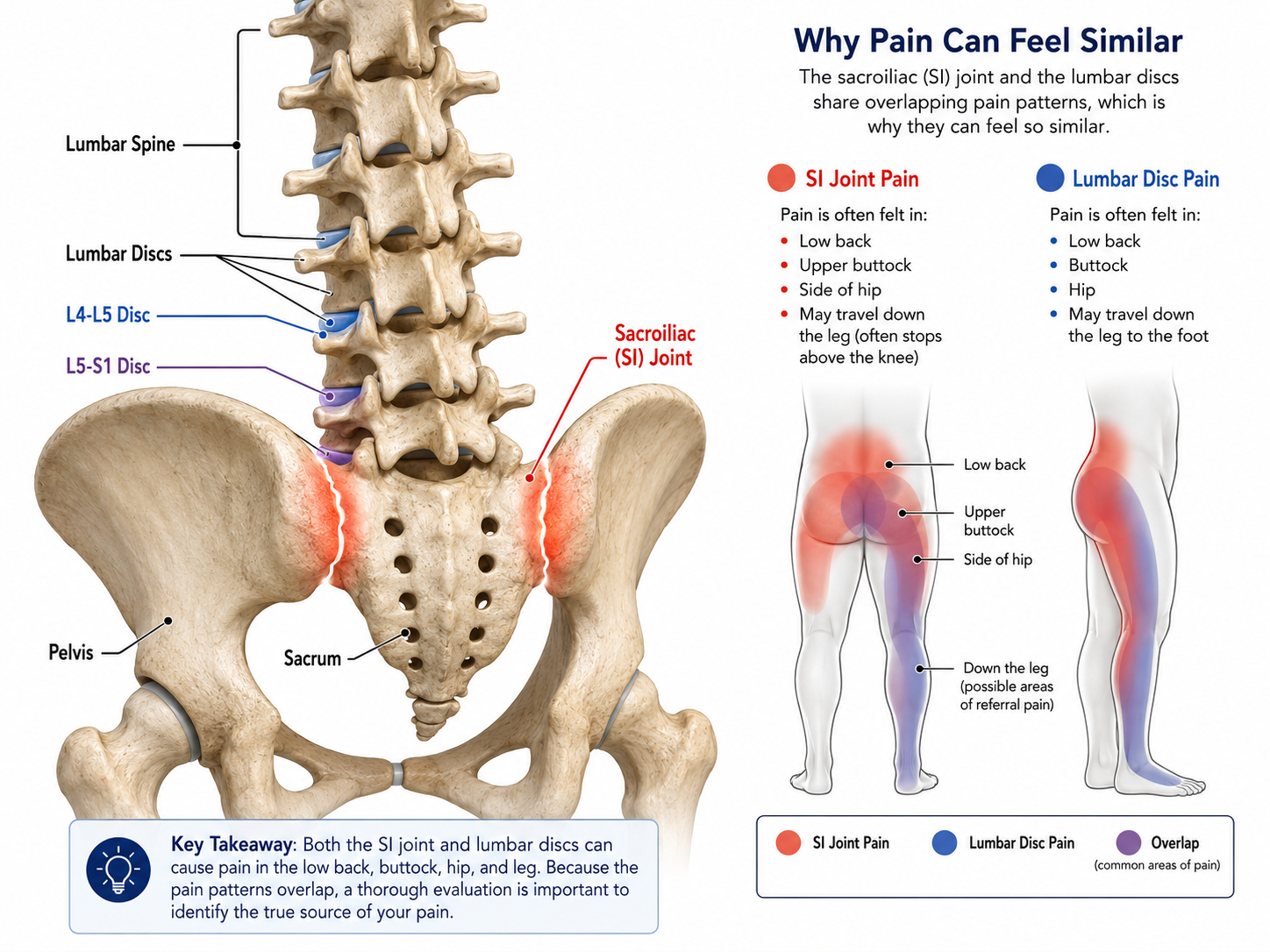
How SI Joint Pain and Herniated Disc Symptoms Differ
SI joint pain and a herniated disc can overlap enough to make the source of pain difficult to identify based on location alone. The better clues often come from how the pain behaves, what movements aggravate it, and whether nerve-related symptoms are present.
SI joint pain is often felt around one side of the lower back, upper buttock, or back of the pelvis. It may become more noticeable with standing, walking, climbing stairs, getting in and out of a car, or changing positions in bed. Because the SI joint helps transfer force between the spine and pelvis, movements that load one side of the body can sometimes make symptoms more noticeable.
A herniated disc can also cause lower-back and buttock pain, but it is more likely to produce nerve-related symptoms when a nearby nerve root becomes irritated. That may include burning pain, tingling, numbness, or weakness that travels farther down the leg.
Sitting, bending, lifting, coughing, or sneezing may aggravate disc-related symptoms in some people. Even so, no single symptom is definitive, and the overlap between SI joint pain, disc problems, and sciatica is one reason a physical evaluation can be useful when symptoms persist.
Why SI Joint Pain Is Often Confused With Sciatica
SI joint pain and sciatica can feel similar because both may cause pain in the lower back, buttock, hip, and leg. The difference is that sciatica usually involves irritation of a nerve root that contributes to the sciatic nerve, while SI joint pain begins around the sacroiliac joint itself.
Sciatica is more likely to produce burning, tingling, numbness, or electric-like pain that travels farther down the leg. SI joint pain can also spread into the thigh or leg, but it often stays closer to the pelvis, buttock, or upper leg.
Because these pain patterns can overlap, symptoms alone may not clearly identify the source. A physical examination can help determine whether the pain is more consistent with the SI joint, a lumbar disc, nerve irritation, or another cause.
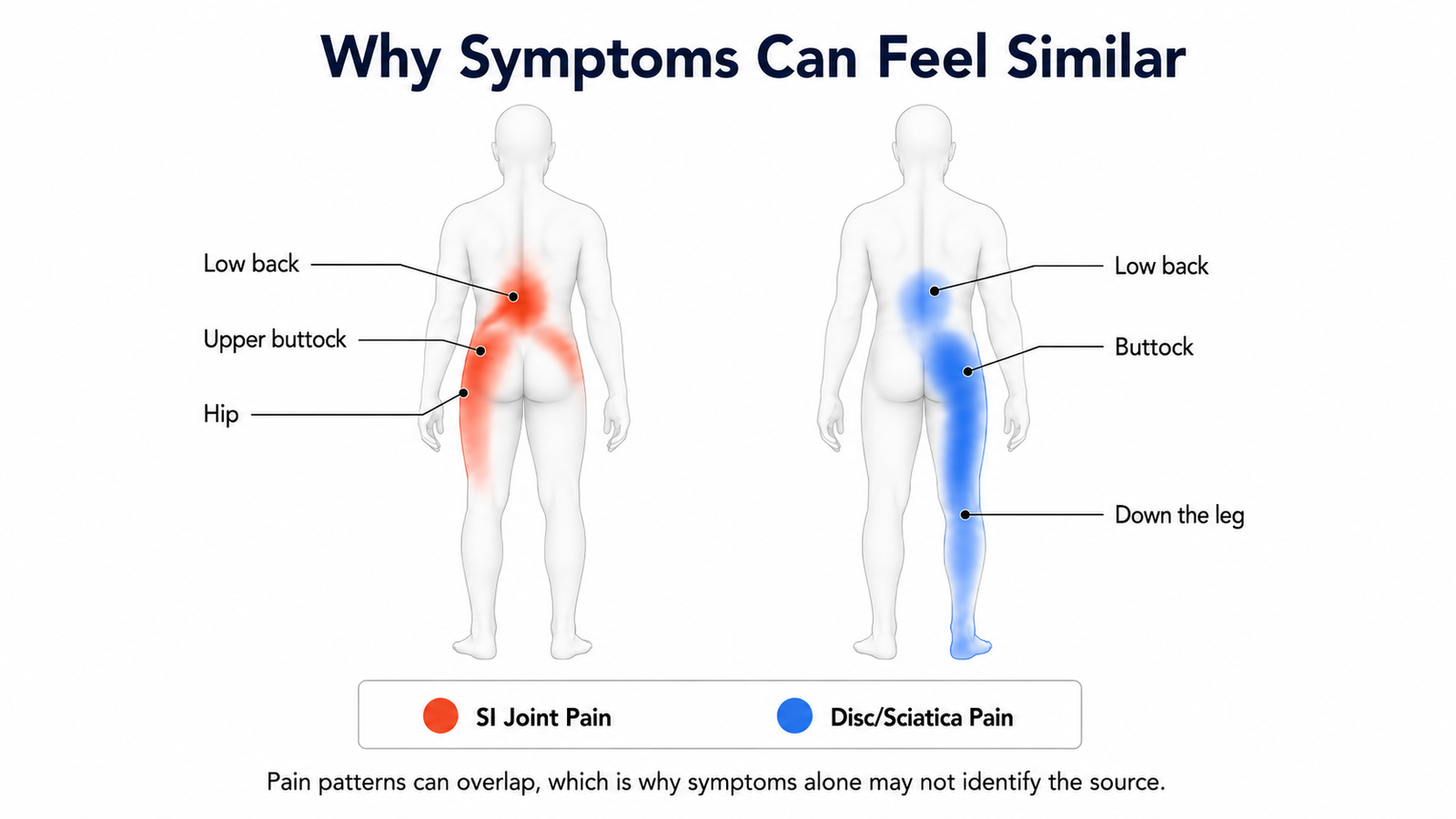
How the Source of Lower Back and Leg Pain Is Evaluated
A careful evaluation usually starts with the pattern of symptoms, when they began, what makes them better or worse, and whether the pain stays near the lower back or travels into the leg.
A physical examination may include checking posture, movement, joint motion, muscle strength, reflexes, sensation, and specific positions that reproduce or relieve symptoms. These findings can help narrow down whether the pain is more consistent with the SI joint, a lumbar disc, nerve irritation, or another source.
Imaging such as X-rays or MRI may be useful in some cases, especially when symptoms are severe, persistent, worsening, or accompanied by neurological changes. But imaging is not always the first step, because findings on a scan do not always match the actual source of pain.
The goal is not simply to identify something abnormal on an image, but to determine which structure is most likely responsible for the symptoms and what type of care is appropriate.
When Lower Back or Leg Pain Should Be Evaluated
Lower-back or leg pain should be evaluated when it persists, keeps returning, interferes with normal activity, or begins to include numbness, tingling, weakness, or pain that travels farther down the leg.
Prompt evaluation is especially important if symptoms are worsening or if there is significant weakness, loss of coordination, changes in bowel or bladder control, numbness around the groin or inner thighs, fever, unexplained weight loss, or pain following a major injury.
For less urgent symptoms, an evaluation can still be useful when the source of pain is unclear. Determining whether the problem is more consistent with the SI joint, a lumbar disc, nerve irritation, or another cause can help guide the next step in care.
Get Help for Lower Back or Leg Pain in Coral Springs
If you’re dealing with persistent lower-back, buttock, or leg pain and aren’t sure whether the source may be the SI joint, a herniated disc, or another problem, a proper evaluation can help clarify what is going on.
At Champion Chiropractic in Coral Springs, Dr. Damian Fronzaglia evaluates the way your symptoms, movement, and physical findings fit together before recommending care. The goal is to identify the most likely source of the problem and determine an appropriate next step.
If your pain is lingering, worsening, or interfering with everyday activity, schedule an appointment with Champion Chiropractic for an evaluation.
Frequently Asked Questions
Can SI Joint Pain Cause Sciatica?
SI joint pain can sometimes feel like sciatica because discomfort may spread from the lower back or buttock into the hip or leg. However, true sciatica usually involves irritation of a nerve root that contributes to the sciatic nerve. Because the symptoms can overlap, an evaluation can help determine the most likely source of the pain.
Is SI Joint Pain the Same as Sciatica?
No. SI joint pain originates around the sacroiliac joint where the pelvis meets the spine, while sciatica involves irritation of the sciatic nerve or the nerve roots that form it. Both can cause buttock and leg pain, which is why they are sometimes confused.
How Can I Tell if My Pain Is From the SI Joint or a Herniated Disc?
SI joint pain is often concentrated around one side of the lower back, buttock, or back of the pelvis. A herniated disc is more likely to cause nerve-related symptoms such as burning, tingling, numbness, weakness, or pain that travels farther down the leg. Symptoms can overlap, so a physical examination is often needed to identify the most likely source.